
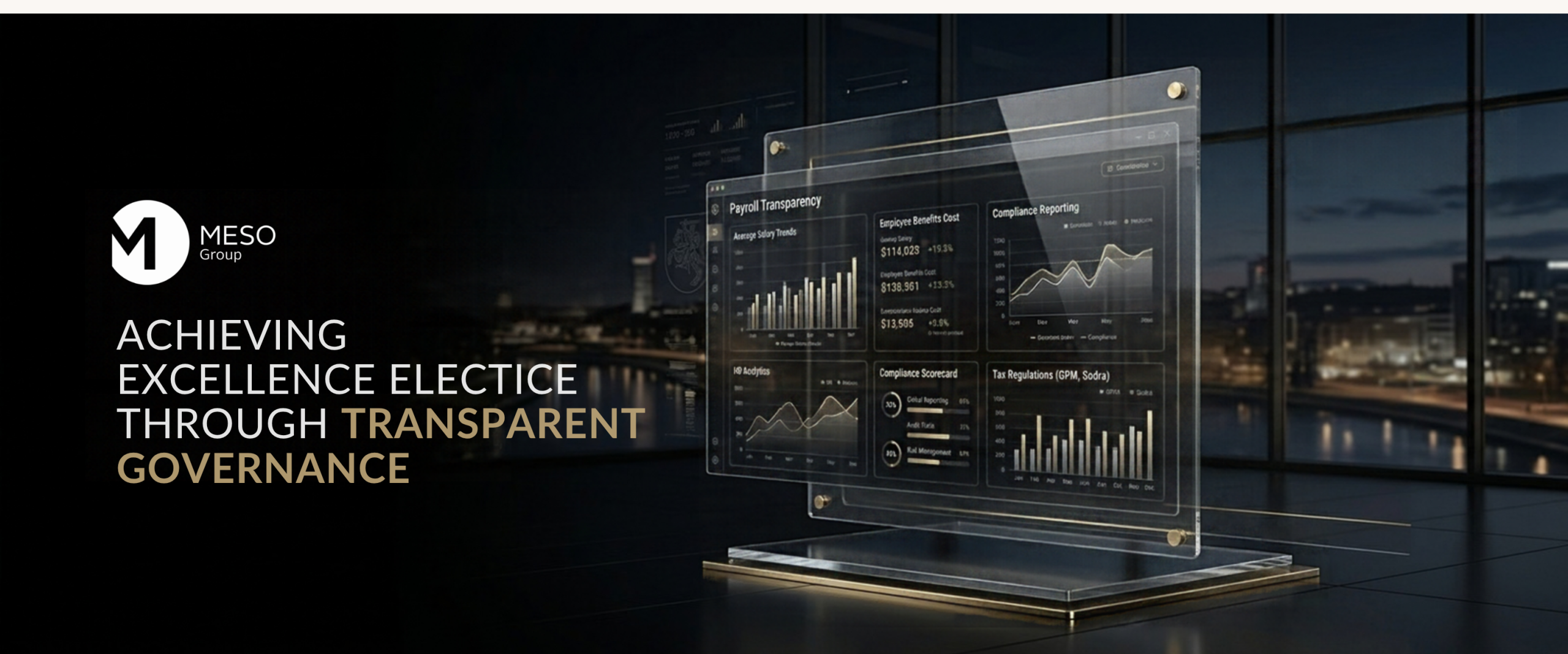
Starting in 2027, new wage transparency requirements will take effect in Lithuania.
Why are these new requirements being introduced?
The changes are related to the implementation of the European Union’s Transparency in Remuneration Directive. The main goal is to ensure equal pay for work of equal value and to provide greater transparency for both employees and employers. New Remuneration Rules in Lithuania: More Transparency, More Rights for Employees [vdi.lrv.lt]
This means that the determination of wages must be based on clear, objective, and documented criteria.
What information will employers be required to provide?
Under the new regulations, employers will provide information on:
- employees’ gross wages;
- additional compensation (bonuses, allowances, and supplements);
- paid working hours;
- the job category assigned to the employee;
- standard working hours;
- work schedule. New Salary Transparency Regulations: What Data Will “Sodra” Collect [sodra.lt]
Dalį informacijos reikės pateikti vieną kartą ir atnaujinti tik pasikeitus duomenims, o atlyginimo bei darbo laiko informacija bus teikiama reguliariai. Nauja atlyginimų skaidrumo tvarka: kokius duomenis rinks „Sodra“ [sodra.lt]
What does this mean for companies?
For many companies, this will be more than just an additional administrative burden. The changes will encourage companies to assess whether:
- the payroll system is clear and documented;
- employee positions are grouped into logical categories;
- the criteria for determining compensation are objective;
- working hours are tracked accurately;
- accounting and human resources management processes allow for the quick collection of necessary data.
In other words, salary transparency becomes the responsibility not only of human resources but also of accounting, finance, and management.
What risks should be assessed now?
Companies that lack a clear compensation policy or a job classification system may face additional challenges:
- more complex data collection;
- a greater administrative burden;
- difficulties in justifying pay differences;
- a higher likelihood of employee inquiries and disputes.
Therefore, preparing in advance can help avoid hasty decisions
How to Prepare for Transparent Compensation Requirements?
Here’s what we recommend doing now:
- Review your compensation system.
- Evaluate the principles for job classification.
- Check your time tracking processes.
- Ensure that all necessary data is collected consistently.
- Verify that your accounting and payroll systems are ready for the new requirements.
MESO Group can help you prepare
Pay transparency requirements will affect not only HR professionals but also accounting, finance, and company executives. The sooner existing processes are assessed, the easier it will be to adapt to the new legal requirements.
MESO Group helps companies:
- administer payroll;
- review compensation systems;
- ensure legal compliance;
- optimize accounting and HR processes.
Are you looking for a reliable partner for payroll administration? Contact MESO Group and prepare for the changes in advance.
info@meso.lt